
Update – October 2025
Big news! The Government has officially passed new laws allowing Kiwis to build granny flats up to 70 square metres without a building consent - a major step toward increasing affordable, flexible housing options across Aotearoa.
This Building and Construction (Small Standalone Dwellings) Bill, supported by updated Resource Management Act (RMA) directions, delivers on the Coalition Government’s Q4 Action Plan and will come into effect in early 2026.
What’s changed
- No building consent needed for simple, single-storey granny flats up to 70 m², provided they meet the design conditions below, and are designed and built by Licensed Building Practitioners (LBPs).
- Resource consent will also be removed under new national RMA direction (expected by the end of 2025).
- Homeowners will need to notify their local council before starting and after completing their build.
- Councils may still charge development contributions when issuing a Project Information Memorandum (PIM) to support local infrastructure.
What happens next
The exemption is scheduled to take effect in Q1 2026, but homeowners can start planning now.
If you’re currently building or planning to start before the law change takes effect, you’ll still need a building consent under the existing system.
Note: The content that follows was first published in August 2025, when these rules were still being proposed. It remains a useful overview of how the policy developed and what the original framework looked like. Some details may now differ from the final legislation.
Can I build a Granny Flat without building consent?
Under this current proposal, the exemption applies to new, detached, single-storey dwellings with a net floor area up to 70 m² (including any integrated garage). Core design criteria are as follows:
Read the Government official proposed conditions here
Size
Less than 70m2, single storey dwelling. Note: no mezzanine floors or lofts.
Separation & setbacks
At least 2m from any other structure or property boundary.
Height and elevation
Maximum height 4m and floor level no more than 1m above ground.
Materials
Light timber/steel frame; roof <20kg/m² and wall cladding <220kg/m².
Plumbing & services
Simple plumbing and drainage; must connect to existing services when available or have on‑site systems; independent electrical or gas supply is required.Note: No complex systems such as sewer pumps.
Building practice
Must be designed and built by Licensed Building Practitioners; LBP must provide records of work.
Building code
Buildings must be designed to meet the building code
Does this apply to rural properties?
Yes. The exemption will apply to both rural and residential zones. However, overlays and district plans still apply (see below).
Can the Granny Flat be the only home on the section?
Maybe.Despite the term “granny flat,” the proposed 2026 exemption applies to any small standalone dwelling up to 70 m² — not just secondary units. The law doesn’t explicitly require a larger main home to be present on the property. That said, some planning professionals interpret the intent as supporting second dwellings rather than stand alones. But based on the wording of the bill and Building Code classification, there's nothing that clearly prevents a compliant small home from being the only dwelling on a section. Until official guidance clarifies this point, the door appears to be open — at least from a building consent perspective.
Can I apply this exemption retrospectively?
No. You cannot apply this rule to past builds. It will only apply to new builds started after the law is passed.
Do overlays or covenants override the exemption?
They might. The exemption only removes the requirement for a building consent, but:
- Natural hazard overlays, flood zones, and reverse sensitivity zones (like near airports) may still require consent.
- Private land covenants and easements still apply and can restrict additional dwellings.
- District Plans may still control density, site coverage, or height.
So always check your local council’s rules before committing.
Will I need a geotechnical or engineering report?
Maybe. The exemption removes the need for building consent, but:
- Foundations still need to be designed by an LBP or engineer.
- If your site is on unusual soil, a geotech report might be needed to confirm appropriate design.
- Sites in natural hazard areas (like flood plains or erosion zones) may still require a geotech or engineering input.
Can I build in a flood zone?
You may not be eligible for the exemption. Natural hazard zones are one of the key disqualifiers for this proposal.If your land is in a flood zone or subject to known hazards, a full building consent may still be required.
Will it make building faster?
Yes. Removing the need for building consent could reduce timeframes by6–12 weeks(or more), depending on your council.But delays may still occur due to:
- Council review of district plan compliance
- Site works, engineering, or utility approvals
Will this reduce building costs?
In many cases, yes. Removing building consent can:
- Save $5,000–$15,000 in consent and consultant fees
- Avoid 2–4 months of paperwork
- Let you choose off-site prefabricated options with faster install
However, costs will still vary by site conditions, design, transport, and services.
Common questions from Kiwi landowners
Can I rent out a Granny Flat?
Yes, in most areas. But you’ll still need to comply withHealthy Homes and Tenancy law.
Do I need resource consent?
Probably not — if your site meets the basic standards.Under the proposed 2026 reforms, a new National Environmental Standard (NES) will make it mandatory for councils to permit one small standalone dwelling per property without resource consent — as long as:
- Your land is zoned residential, rural, mixed-use, or Māori-purpose
- You comply with rules for height, setbacks, and site coverage
- Your site is not affected by overlays like flooding, heritage, or landscape protections
However, resource consent may still be required if you breach these standards, try to build more than one minor dwelling, or your site is in a sensitive area.The goal is to make building small homes faster and easier — but some edge cases will still need planning approval.
Does this apply to transportable homes?
Absolutely. Most transportable homes under 70m² will be eligible—provided they satisfy all design and compliance requirements. Transportable solutions are highly advantageous, offering accelerated build timelines and minimising on-site disruption.
Can I build on Māori land or as part of a Papakāinga?
Yes. The National Policy Statement on Urban Development and proposed National Environmental Standard both support papakāinga development, and this exemption could make it even more accessible.
What if I already applied for consent?
If you’ve already applied and paid, you may not get a refund even if the law passes later. You may wish to wait before submitting – but talk to a planner or your council first.
Does Manor Build supply minor dwellings?
Manor Build have many options to build your Minor Dwelling and meet all the above regulations. Watch this space for an entirely new range coming out specifically to meet these requirements and make it easy to purchase your dream Granny Flat. In the meantime if you want to start the design process please reach out.
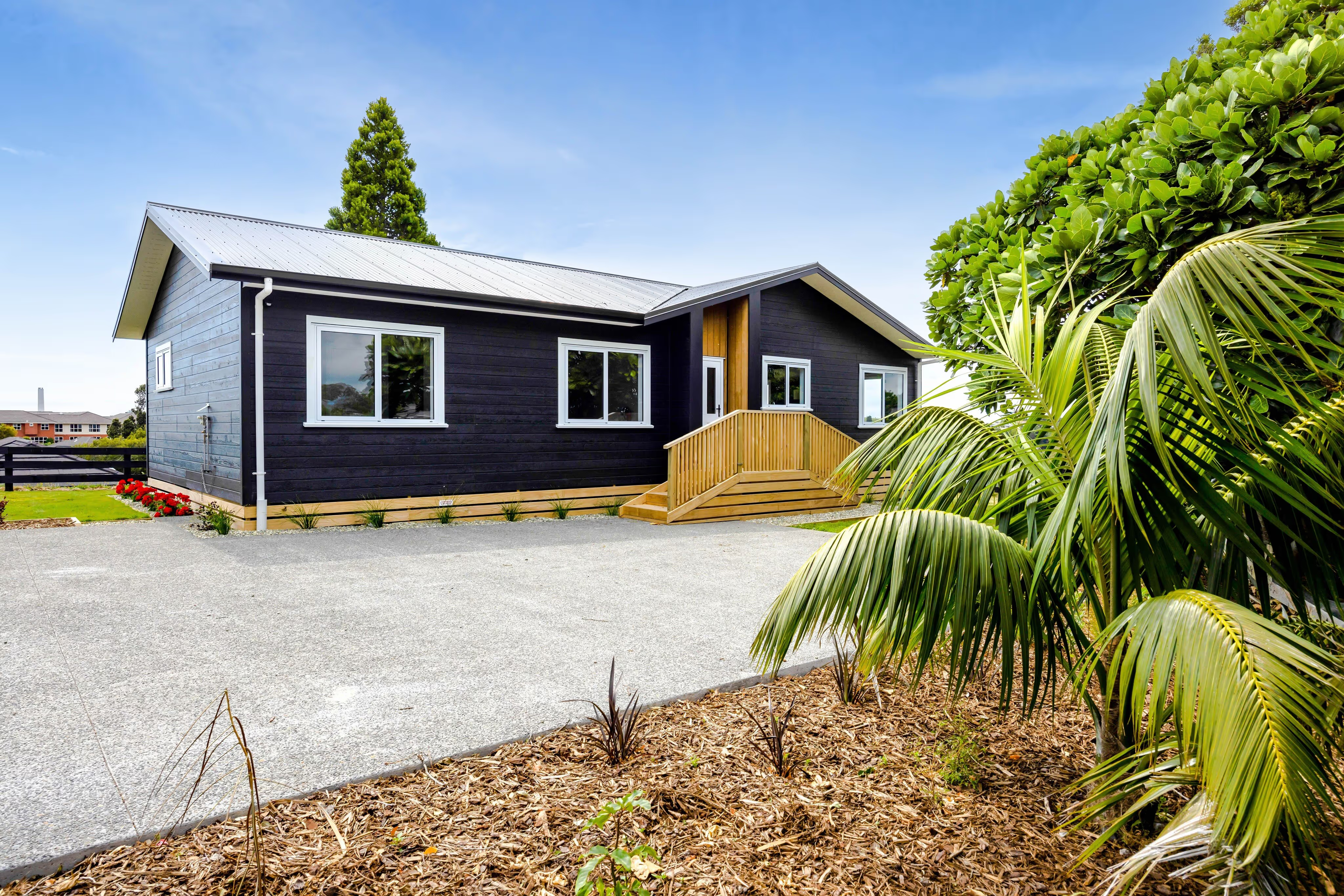
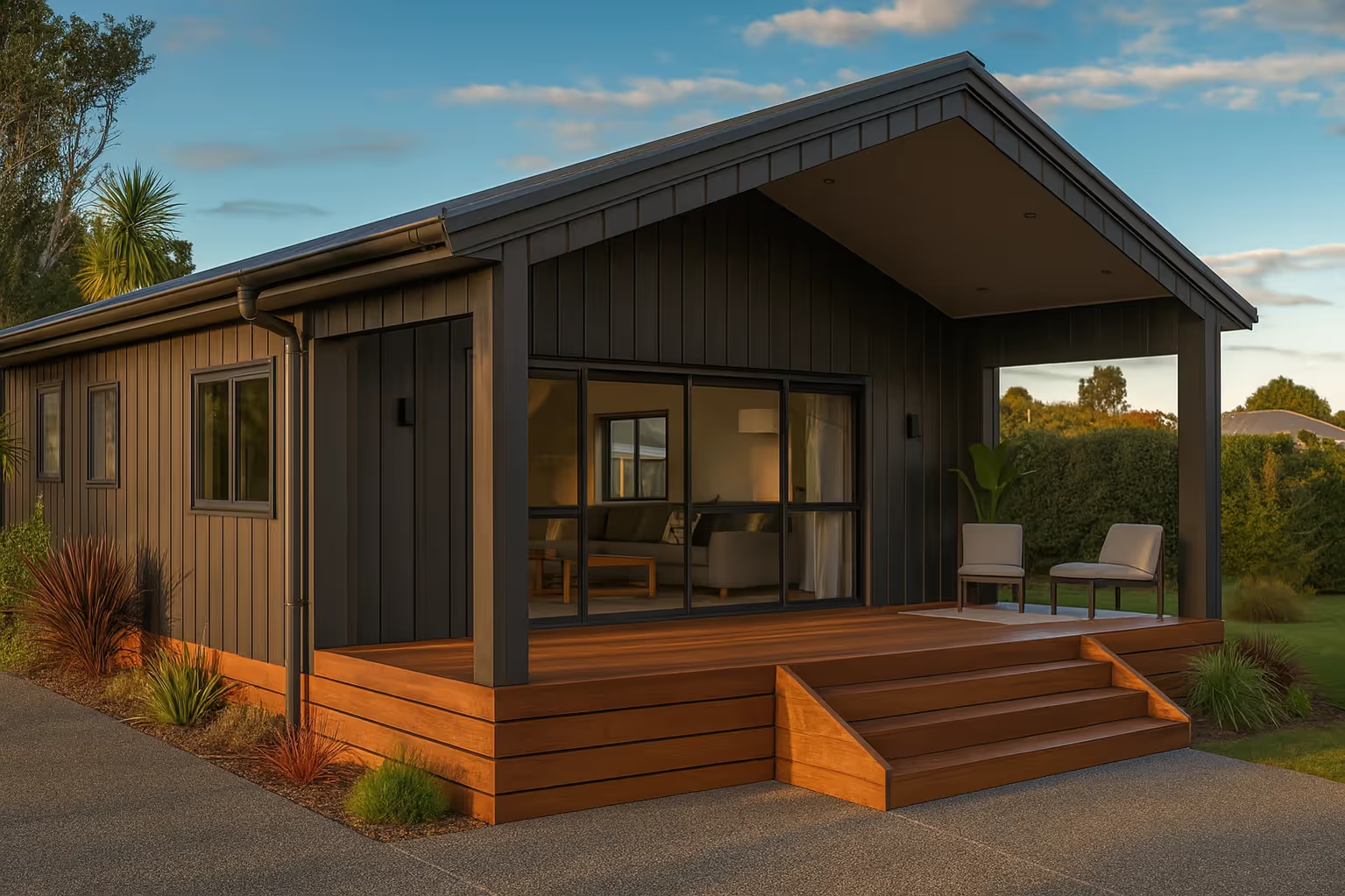
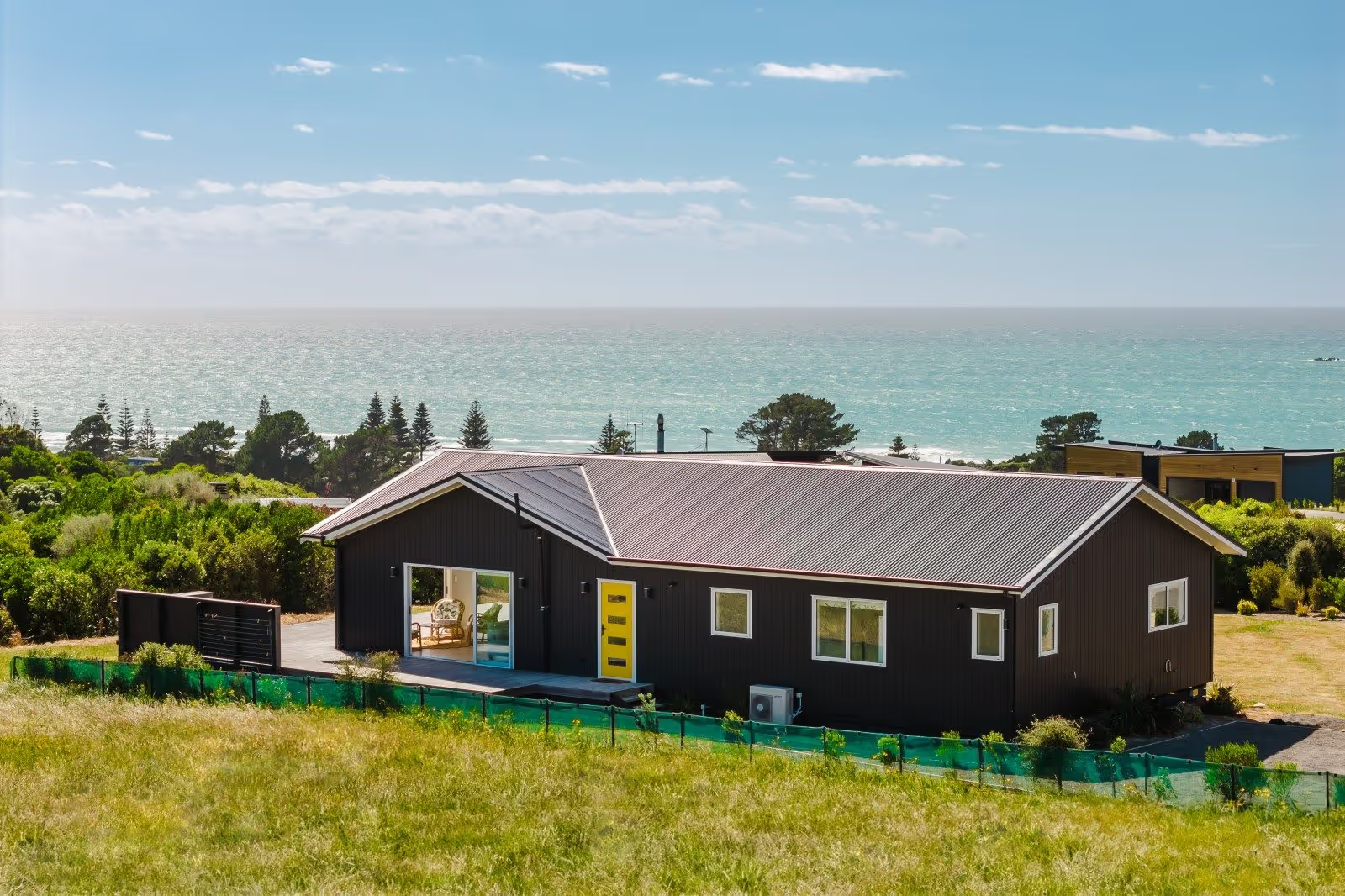
An example below of a 70 m2 three bedroom, 2 bathroom design.

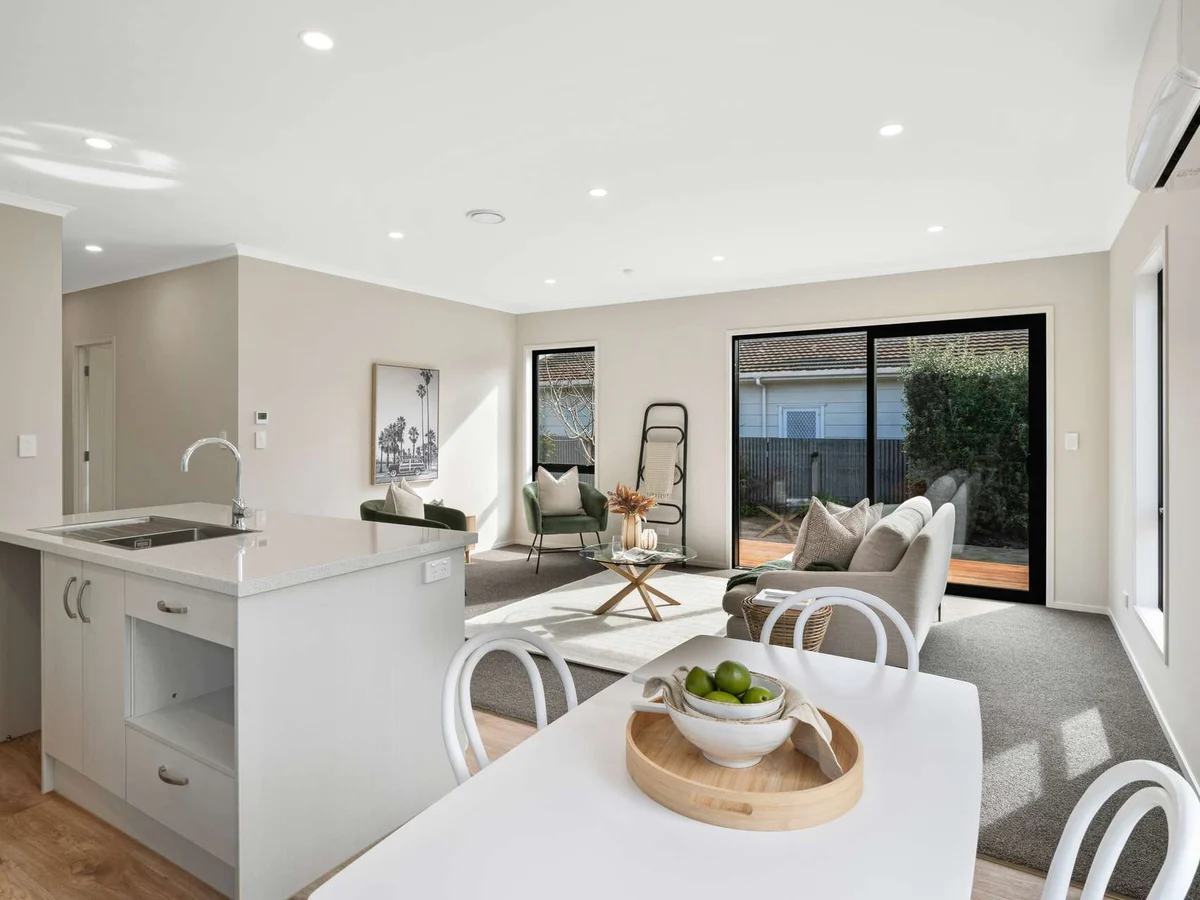
An Example of a 59m2 granny flat design, 2-bedroom and 2-bathroom.