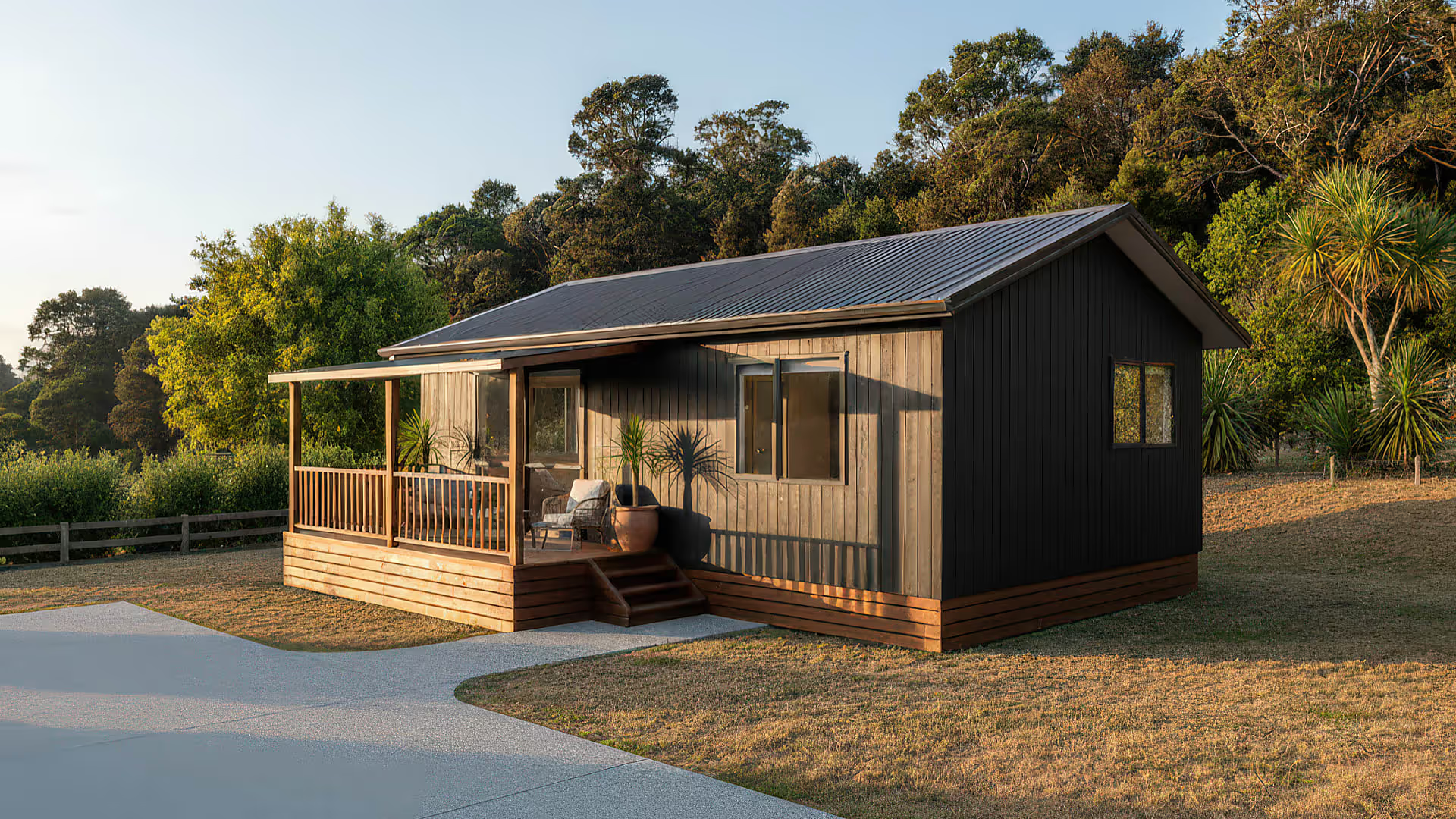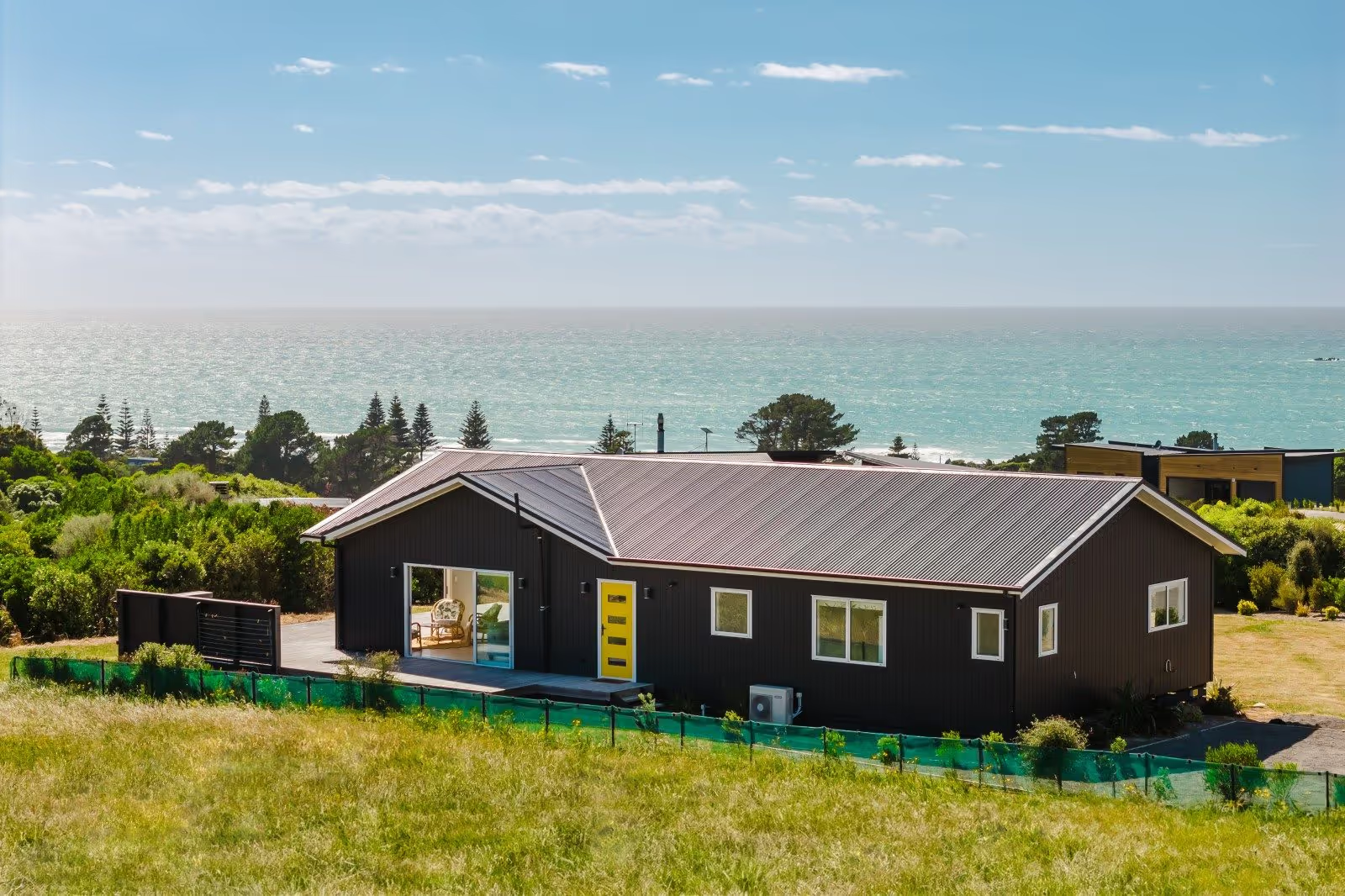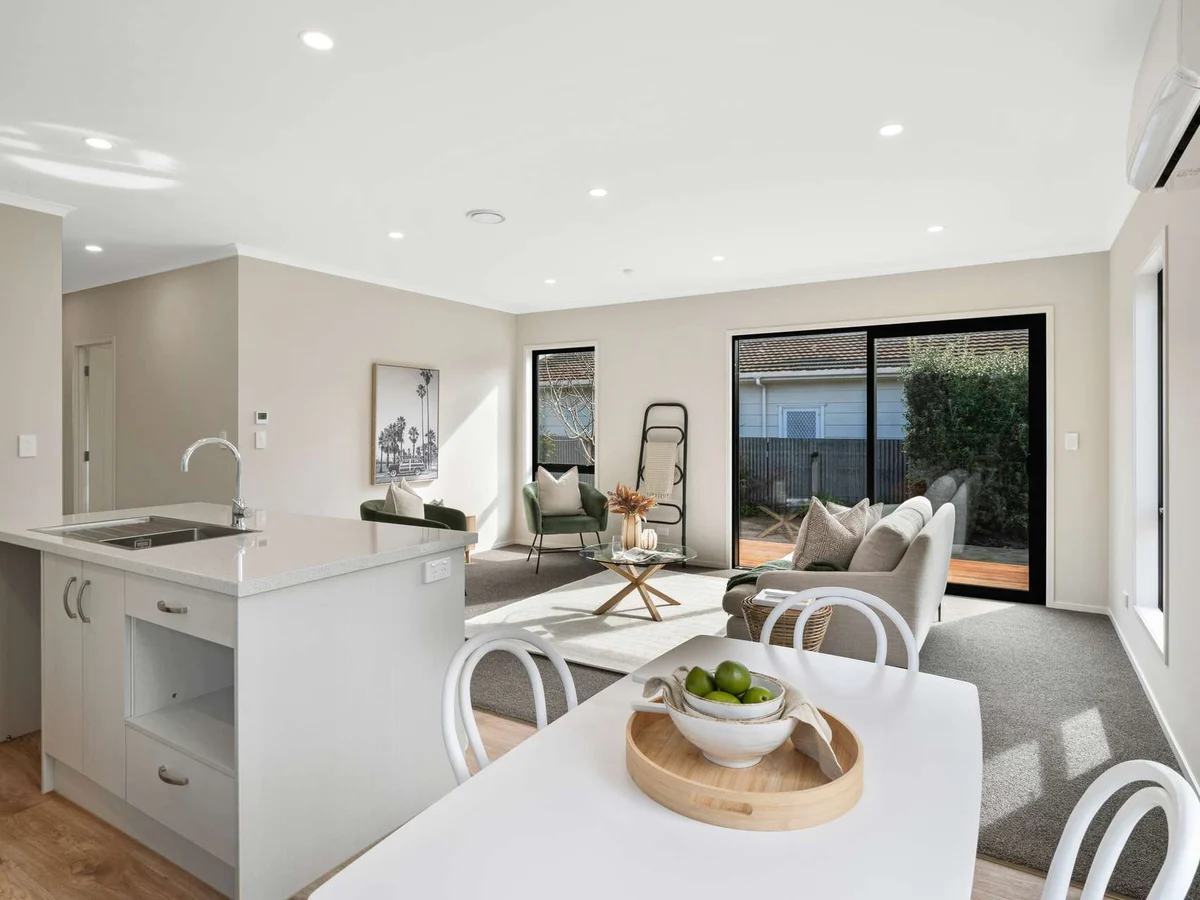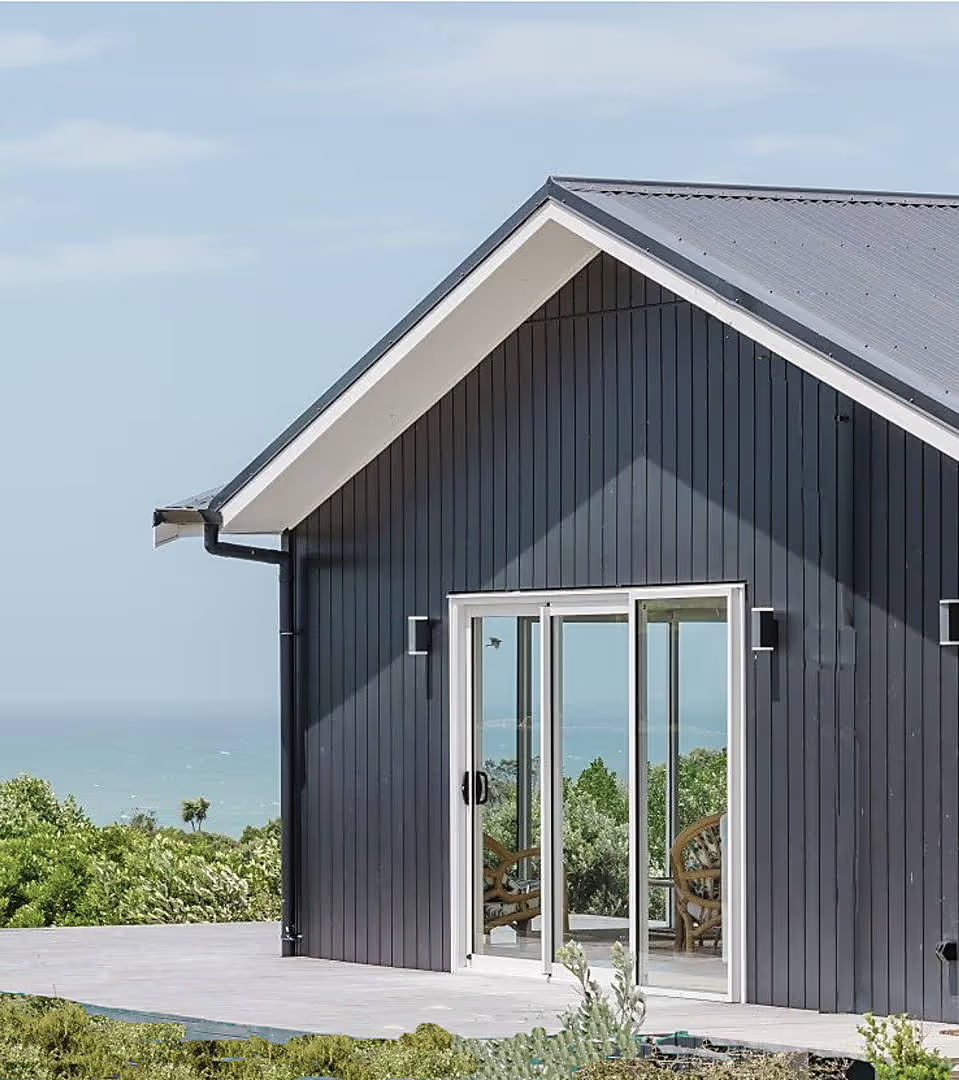
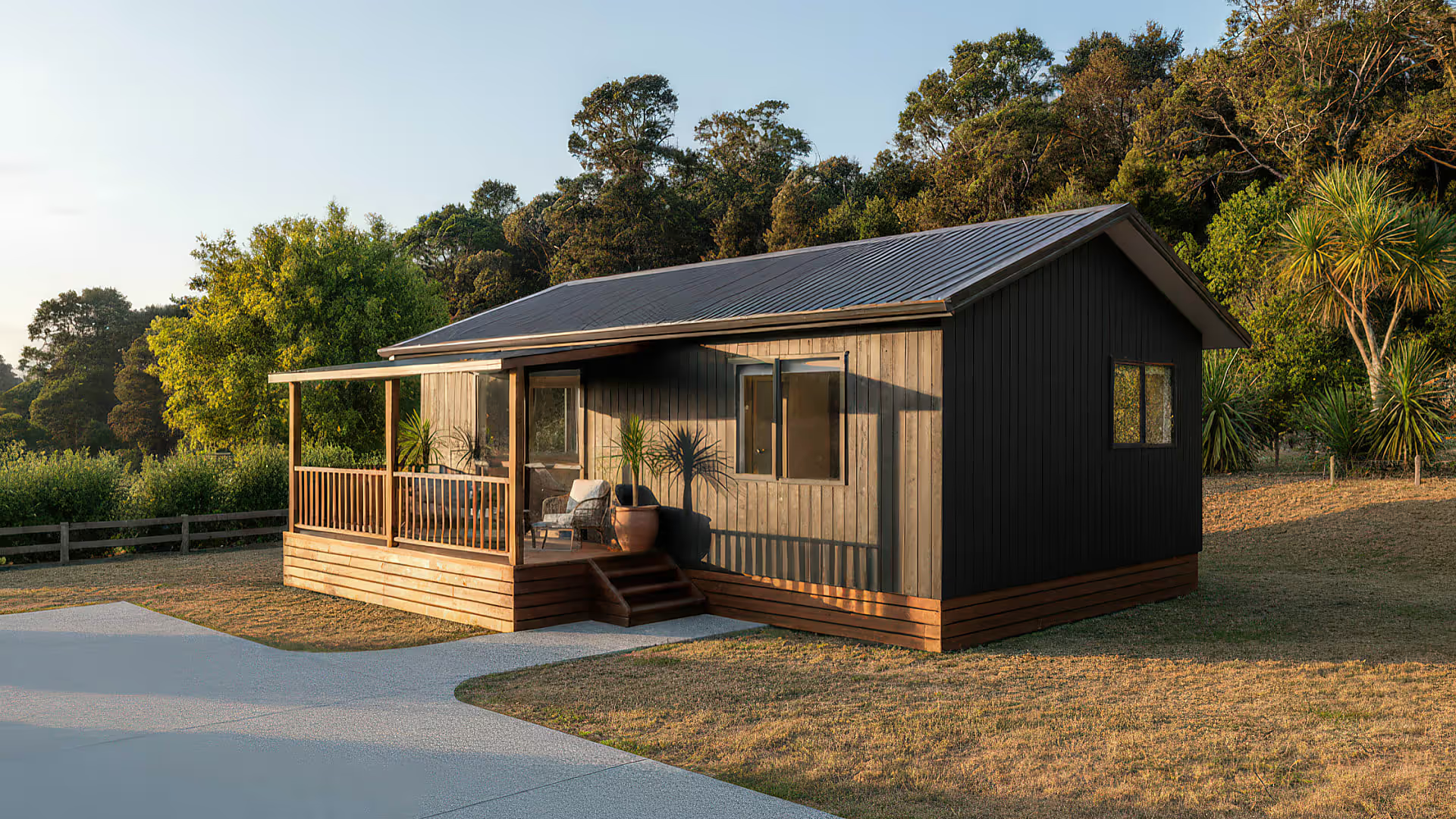
From 15th January 2026, New Zealand introduced new national rules that make it significantly easier to build a granny flat — also known as a minor dwelling or small standalone dwelling — on an existing residential or rural property.
In short, you can now build one small, detached, self‑contained dwelling up to 70m² without a building consent and without a resource consent, provided the design stays within a very specific set of limits.
This guide explains what changed, the rules that apply, and where the exemptions stop.
What counts as a “granny flat” under the new rules?
The legislation uses different terms depending on context:
- Small standalone dwelling under the Building Act (building consent exemption)
- Detached Minor Residential Unit (DMRU) under planning law (resource consent exemption)
In practical terms, a qualifying granny flat must be:
- New
- Detached
- Single‑storey
- Fully self‑contained (kitchen, bathroom, living)
- Built on the same site as a main dwelling
- 70m² or less internal floor area
It does not need to house a family member. It can be used for rental, extended family, or guest accommodation.
What changed in 2026?
Two changes came into force together.
1. Building consent exemption
A qualifying granny flat can now be built without a building consent, provided every exemption condition is met.
Important points that remain:
- The building must still comply with the NZ Building Code
- Licensed professionals are still required for Restricted Building Work
- A Project Information Memorandum (PIM) must be obtained before construction
- Compliance documentation must be provided to council after completion
There are no routine council inspections. Responsibility for compliance sits with the designer, builder, and owner.
2. Resource consent exemption
A new National Environmental Standard (NES) makes one compliant detached minor dwelling a permitted activity in most residential and rural zones.
If the standards are met, councils cannot require a resource consent for the dwelling itself.
The rules you must comply with (this is the important part)
To use the consent‑exempt pathway, every rule below must be met.
If any rule is breached, the project drops back into the standard consenting process.
A) Building consent exemption rules (Building Act – Schedule 1)
1. Building form and layout
The dwelling must be:
- New build only (no relocated or second‑hand buildings)
- Detached (not attached to another structure)
- Designed for a single household
- Fully self‑contained
- Single‑storey only
This point is critical.
The exemption does not allow:
- Mezzanines
- Lofts
- Sleeping platforms
- Partial upper levels
Even a small open mezzanine counts as an additional storey and immediately disqualifies the build.
If you want any form of loft, a building consent is required.
2. Size, height, and placement
All of the following limits apply:
- Maximum internal floor area: 70m²
- Maximum building height: 4.0m above floor level
- Maximum finished floor level: 1.0m above supporting ground
- Minimum 2.0m separation from:
- Any other residential building on the site
- All legal property boundaries
- Must not cross allotment boundaries
These limits keep the building low‑risk and clearly secondary in scale.
3. Structure and materials
The exemption only applies to lightweight construction:
- Timber or light steel framing
- Roof cladding limited to 20kg/m²
- Wall cladding limited to 220kg/m²
Heavy masonry systems typically fall outside these limits and usually require a building consent.
4. Services must remain “simple”
To qualify, the building must use simple building systems:
- Maximum 30 fixture units total
- No pumped plumbing systems inside the building
- Main drain minimum DN100 at 1:60 fall
- Branch drains minimum DN65 at 1:40 fall
- Upstream vents minimum DN65
- No uncontrolled water heating
Heating matters here.
Simple systems such as electric heating generally fit within the exemption when they meet fire and air‑quality rules. More complex or higher‑risk systems may trigger the need for consent.
5. Utilities
The dwelling must have:
- An independent electricity supply
- An independent gas supply if gas is used
In this context, independent means the granny flat must have its own compliant point of supply or connection that meets the relevant utility provider’s standards. The intent is to ensure the local network and on-site infrastructure can safely handle the additional load without relying on, or overloading, the main dwelling’s existing connection.
Water, wastewater, and stormwater must be:
- Connected to council services, or
- Lawfully managed on-site where services are unavailable
6. Professional responsibility and council process
Even without a building consent:
- Restricted Building Work must be designed and/or supervised by Licensed Building Practitioners
- A PIM must be issued before construction begins
- Records of Work and compliance documentation must be submitted to council after completion
B) Resource consent exemption rules (NES‑DMRU)
1. What is permitted
- One detached minor residential unit per site
Applies in:
- Residential zones
- Rural zones
- Mixed‑use zones
- Māori purpose zones
2. Site standards
All zones
- Maximum internal floor area: 70m²
Residential zones
- Maximum 50% site coverage (all buildings combined)
- Minimum 2.0m setbacks from all boundaries
- Minimum 2.0m separation from the main dwelling
Rural zones
- 10.0m front setback
- 5.0m side and rear setbacks
3. Rules that still apply
The NES does not override district plan rules relating to:
- Natural hazards (flooding, erosion, instability)
- Earthworks
- Infrastructure capacity
- Heritage or protected sites
- Subdivision
If these require consent, the exemption does not override them.
Where the exemptions stop (important to understand)
While the 2026 changes remove the need for building and resource consents when all conditions are met, they do not remove other council charges or obligations.
A key example is Development Contributions (DCs).
Most councils still charge Development Contributions for an additional dwelling to account for increased demand on local infrastructure such as pipes, roads, and community assets. These charges are not exempt under the new rules and are commonly identified during the PIM application process.
The exact amount, timing, and trigger for Development Contributions varies by council and zone and must be confirmed with the relevant local authority.
When will consents still be required?
You will still need consents if:
- The building exceeds 70m²
- A mezzanine or loft is included
- Heavy construction systems are used
- Services become complex
- Setbacks or site coverage cannot be met
- Site hazards trigger additional controls
The project can still proceed. It simply follows the standard consenting pathway instead.
Key takeaway
The 2026 rules make it much easier to add a granny flat — if you design within the exemption limits.
Think:
- One level only (no lofts)
- Lightweight construction
- Simple plumbing and heating
- Clear 2m separations
Step outside those boundaries, and consents return.
The real advantage comes from designing correctly at the start, not trying to retrofit compliance later.
Considering a 70m² minor dwelling?
A factory‑built minor dwelling can make it easier to control design, materials, and compliance from the outset. If you are exploring options, focus on plans and systems that already sit comfortably inside the exemption rules.